Duke Energy's next SC rate increase takes effect Aug 1, 2026 · see what it means for your bill ↓
AI-generated video · Seedance
Greenville County, SC· The biggest new strain on your grid isn't homes. It's data centers.

Greenville, the AI data-center boom has reached your grid. Here's what it means for your power bill.

Duke Energy — the utility that powers Greenville County and the Upstate — says electricity demand is suddenly growing eight times faster than it did over the past 15 years, with data centers a major driver — and a share of what it costs to keep up lands on household bills. Here's the data, and the moves that put you back in control — even if you already have solar.

Want to learn more about home batteries?

Plain English, no sales pitch: how a battery works with (and without) solar, the quarter-on-the-dollar math, and the questions to ask any installer.

We'll text you shortly. By submitting, you agree Blue Ridge Solar & Storage may contact you by text message (SMS), phone, or email about your home's energy options. Consent isn't a condition of any purchase; message & data rates may apply; reply STOP anytime to opt out. We never sell or share your information. See our privacy notice.

Free to read · non-partisan · we never sell your data.

Every figure on this page comes from the institutions that run and regulate the grid: Duke Energy · U.S. Dept. of Energy · Lawrence Berkeley National Lab · IEA · NERC · PJM · ERCOT · Carnegie Mellon
faster the Carolinas' electricity demand is now growing than the prior 15 years — on Duke Energy, the grid that serves Greenville & the Upstate.
Duke Energy 2025 Carolinas Resource Plan
0%
rise in U.S. home electricity prices since 2021 — and data-center demand is accelerating the squeeze.
U.S. EIA
0%
expected rise in U.S. data-center power demand by 2030 — the force driving it.
Goldman Sachs Research, 2025
0%
data centers' projected share of all U.S. electricity by 2028.
LBNL / U.S. DOE, 2024
Jump to what fits you:

01 — The surge

One data center can use as much power as a whole city — and there are hundreds

A single large AI data center can draw as much power as a mid-sized city — running flat out, 24 hours a day, 365 days a year. Hundreds are being built. For the first time in two decades, U.S. electricity demand is climbing sharply, and the IEA expects data centers to drive nearly half of all U.S. electricity-demand growth this decade.

Data centers' share of U.S. electricity

% OF TOTAL NATIONAL CONSUMPTION, BY YEAR

1.9%
2018
4.4%
2023
~9%
2028 (low)
~12%
2028 (high)

Source: Lawrence Berkeley National Laboratory, “2024 United States Data Center Energy Usage Report” (Dec 2024). 2028 estimates span ~6.7%–12% of national consumption.

So what does that do to a Greenville power bill? Duke Energy's own filings answer that


02 — Your bill

You're already paying for it — up nearly 28% since 2021

Electricity prices are set by supply and demand. When huge new loads bid for a limited pool of power and grid capacity, the price to keep the lights on rises — and a portion flows through to household bills, whether or not you ever set foot in a data center. U.S. home electricity prices are already up nearly 28% since 2021 — and if Duke Energy Carolinas powers your home in the Upstate, you don't have to guess what's next: the next increase already has a date.

Aug 1, 2024 — took effect
+8.7% (+$12.06/mo)

Rate increase approved for Duke Energy Carolinas' ~660,000 Upstate South Carolina customers (typical 1,000-kWh home).

Duke Energy / Public Service Commission of SC, 2024
2025 — asked again
+7.7% requested

Duke filed for another $150.5M from SC customers. Public pushback at Upstate hearings helped settle it near zero — this time.

Settled at +0.6% SC Office of Regulatory Staff; Fox Carolina, 2025
Bottom line for a typical 1,000-kWh Upstate home: ≈ $222 more per year once both approved steps are in effect — before any future filings.
800%One-year jump in the cost of guaranteed grid capacity across the 13-state PJM region (≈$2.2B → $14.7B). The next auction hit the price cap at $16.4 billion — and fell short of PJM's own reliability target for the first time.

PJM Interconnection capacity (Base Residual) auction results, 2024–2025

  • 40% of the cost. In PJM's latest auction, data-center demand drove about $6.5 billion — and an estimated 63% ($9.3B) of the prior year's increase.Monitoring Analytics (PJM Independent Market Monitor), 2025
  • Rate-hike requests doubled. U.S. utilities asked for nearly $31 billion in increases in 2025 — double 2024's $15 billion — touching ~81 million billpayers.PowerLines, 2026
  • +$21 a month. In Washington, D.C., Pepco bills rose about $21/mo in mid-2025 — consumer advocates tied roughly half to the capacity-price spike.D.C. Office of the People's Counsel, 2025
  • +8% nationwide; 25%+ in Virginia. Carnegie Mellon projects data-center growth could raise average U.S. generation costs ~8% by 2030 — and more than 25% in parts of Virginia.Carnegie Mellon University (Open Energy Outlook), 2025

Interactive · estimate

What could this mean for your bill? ◂ drag the slider ▸

Set the slider to your current monthly electric bill, then choose a scenario. This is an illustrative projection based on recent U.S. rate trends and analysts' forecasts — not a prediction for your specific utility.

Today$180/mo
In 5 years$241/mo

That's about $2,100 out of your pocket over five years — before you change a single habit.

Want to get ahead of it? Learn whether a home battery blunts numbers like these — and how to read your rate plan before Duke's August 1 increase lands.

Learn more

Compounded annually and rounded. ~6%/yr reflects the average U.S. residential price rise in 2025; the higher scenarios reflect analysts' projections of data-center-driven cost pressure (EIA, NERC, Carnegie Mellon, EPRI — see Sources). Your actual rates depend on your utility, usage, and state policy.

Money is only half the story. The other half is whether the lights stay on

Data center load growth is the primary reason for recent and expected capacity market conditions — including the significant shortfall in cleared capacity, and high prices.

Monitoring Analytics — the Independent Market Monitor for PJM, 2025

03 — Reliability

The risk isn't just cost. It's keeping the lights on.

The North American grid reliability regulator now warns that demand is growing faster than new power supply can be built — leaving much of the country at elevated risk of supply shortfalls during extreme weather over the next decade.

Christmas Eve 2022 — the morning it happened here

During Winter Storm Elliott, demand on Duke Energy's system outran its forecasts and available generation — and for the first time in the company's 100-plus-year history, Duke began rotating blackouts across the Carolinas. About 500,000 homes lost power, roughly 95,000 of them in South Carolina, on one of the coldest mornings of the year. That was before the data-center wave reached the Carolinas' grid. The lesson isn't that it will happen every winter — it's that "the grid always holds" stopped being a safe assumption, even here.

SC Office of Regulatory Staff, Winter Storm Elliott Inspection & Examination Report; Duke Energy filings, 2022–2023

A warning sign from Virginia — July 10, 2024

A single transmission fault near “Data Center Alley” caused 60 data centers to drop off the grid almost simultaneously — about 1,500 megawatts of load gone in 82 seconds as facilities switched to backup power. Grid frequency moved sharply, and operators managed it without customer outages — but it was a wake-up call. By May 2026, NERC — the federally-designated regulator for North American grid reliability — had escalated to a Level 3 “Essential Action” alert, the highest and rarest tier it issues, because it still can't reliably predict how data-center load behaves during a disturbance. The point isn't that blackouts are coming tomorrow; it's that the margin for error is shrinking — and homes that can ride through a brief outage are better positioned.

NERC Incident Review & Level 3 Alert / PJM, 2024–2026

Hurricanes. Floods. Ice. The Upstate's grid lives in the path of all three.

Data centers are tightening the supply side of the grid. The weather side was never calm to begin with — none of these are hypotheticals in South Carolina; they're recent memory. Each numbered pin on the map matches a numbered card — hover or tap to connect them.

N.C. GA. ATLANTIC OCEAN HURRICANE COAST FLOOD-PRONE MIDLANDS UPSTATE ICE & WIND HELENE'S PATH · SEPT 2024 1 GREENVILLE — you are here 2 Charleston 3 Columbia 4
1

Helene came 200 miles inland — straight here

Sept 2024: about 1.25 million SC homes and businesses lost power. Greenville, Spartanburg, and Anderson were among the hardest hit — Duke called the Upstate transmission damage “significant and perhaps historic,” and some homes waited days, not hours.

Duke Energy; ABC News 4 / poweroutage.us, 2024
2

Top-5 state for hurricane landfalls

30+ hurricanes have made landfall in South Carolina — six of them major, including Category-4 Hugo in 1989, which set storm-tide records on the U.S. coast.

NOAA HURDAT; SC State Climatology Office
3

The 1,000-year flood

October 2015: 20+ inches of rain in days, 18 dams breached, ~$12 billion in damage statewide, 19 lives lost.

NOAA / NWS Service Assessment; SC Emergency Management Division
4

Ice is the Upstate's quiet grid-killer

January 2026: the Upstate's worst ice storm since 2005 left 30,000+ without power — nearly 5,000 in Greenville County — with Duke warning the hardest-hit could wait days.

SC Daily Gazette; The Post and Courier, Jan 2026

Every one of these ends the same way for a household: waiting on the grid. A solar-only home waits in the dark too — grid-tied panels shut off during outages. A battery is what rides through. Map is illustrative; risk zones approximate.

50%+
of North America at risk
More than half the continent faces elevated or high risk of electricity shortfalls within 5–10 years as demand outpaces supply.
NERC Long-Term Reliability Assessment, 2024
+224 GW
in new peak demand
NERC's 10-year summer peak forecast jumped about 24% in a single year — even as ~122,000 MW of dispatchable power is set to retire.
NERC LTRA, 2024
~2x
Texas demand by ~2030
ERCOT expects ~43 GW of new demand by 2030; large-load requests have nearly quadrupled in a year — enough to nearly double Texas's peak.
ERCOT load forecast, 2025

And the build-out driving all of this? It's already inside Greenville County

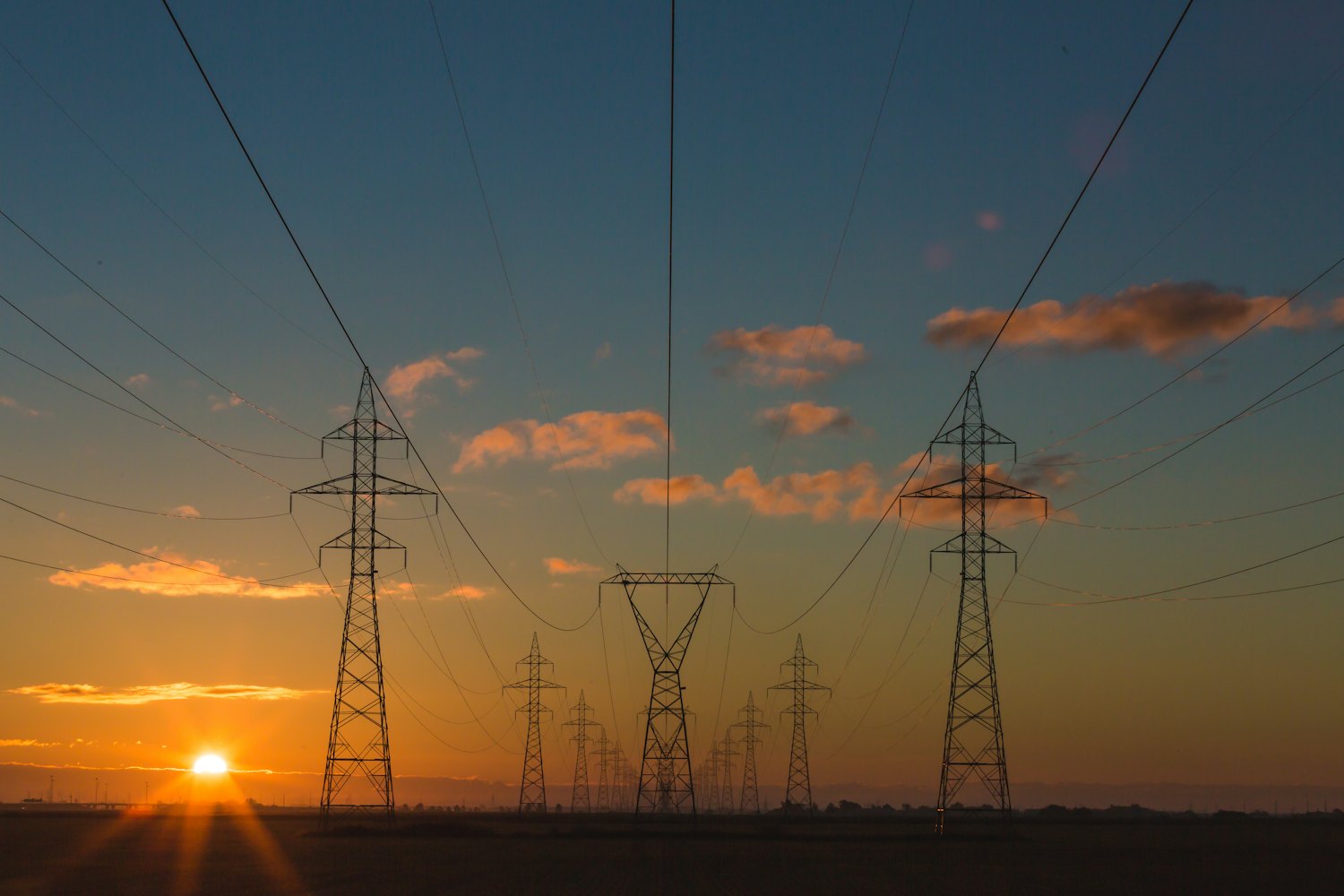
Silhouetted high-voltage transmission towers and power lines against an orange sunset Photo: Unsplash
The system under strain

The same wires now carry a city's worth of new demand

Every new data center plugs into the grid you already share — competing for the same power, the same lines, and the same shrinking reserve margin.

04 — Near you

This isn't a far-off problem — it's already reaching Greenville.

It's playing out from Lake Tahoe to the Upstate of South Carolina — the build-out is local, and so are its effects on your power supply and your rates.

● It's already happening · Lake Tahoe, NV

A utility chose data centers over a town's homes

NV Energy is redirecting grid capacity to the data-center boom around the Tahoe-Reno Industrial Center — and has told the local provider it will stop supplying power to the Lake Tahoe area after May 2027, leaving roughly 49,000 residents scrambling for a new source. Data centers already consume about 22% of Nevada's electricity, a share projected to reach 35% by 2030.

Fortune; NV Energy Integrated Resource Plan, 2024–2026

0
residents facing a loss of their current power supply after May 2027
0%
of Nevada's electricity projected to go to data centers by 2030 (up from 22% in 2024)
Your area · South Carolina (Duke Energy)

Greenville & the Upstate — your grid

3% → 10%

If you're served by Duke Energy here in the Upstate, this is your grid. Duke signed 1.5 GW of new data-center contracts in a single quarter, and data centers are set to jump from 3% to 10% of its Carolinas commercial sales by 2028 — with regional demand now growing roughly 8× faster than the prior 15 years. It's in the county itself, too: DartPoints is putting $125 million into expanding its Greenville data center for AI workloads. The plan that powers all of it also sets the rate on your bill.

Duke Energy 2025 Carolinas Resource Plan; SC Daily Gazette / Greenville Business Magazine, 2025
Spartanburg · 30 miles away

City-scale power. 27 full-time jobs.

27 jobs

In April 2025, Northmark Strategies announced a data-center campus in Spartanburg. Facilities this size can draw as much power as a small city — this one is expected to create 27 permanent jobs. And South Carolina isn't yet tracking how many more are on the way.

Upstate Forever; The Post and Courier, 2025

Meanwhile, around the country — swipe →

Virginia

“Data Center Alley”

~70%

Loudoun County is the densest data-center hub on the planet — widely cited as carrying ~70% of internet traffic. Dominion Energy has proposed a separate, higher rate class just for large data-center loads.

Loudoun County EDP; Dominion Energy
Texas · ERCOT

Half a century of growth at once

+43 GW

ERCOT expects ~43 gigawatts of new demand by 2030 — large-load requests have nearly quadrupled in a year, led by data centers, enough to nearly double the state's peak.

ERCOT, 2025
Georgia

Demand on track to triple

80%

Georgia Power says ~80% of its projected demand growth this decade is tied to data centers — and regulators approved nearly 9,900 MW of mostly-gas generation to serve it.

Georgia Power 2025 IRP; Georgia PSC
Ohio

Making them pay their share

85% / 12 yrs

After a flood of requests, Ohio regulators now require large data centers to pay for at least 85% of the capacity they reserve for up to 12 years — to protect other ratepayers.

PUCO / AEP Ohio, 2025

Your ZIP stays in your browser — nothing is stored or sent.

Got solar? You're partly protected — but South Carolina quietly changed the rules on you

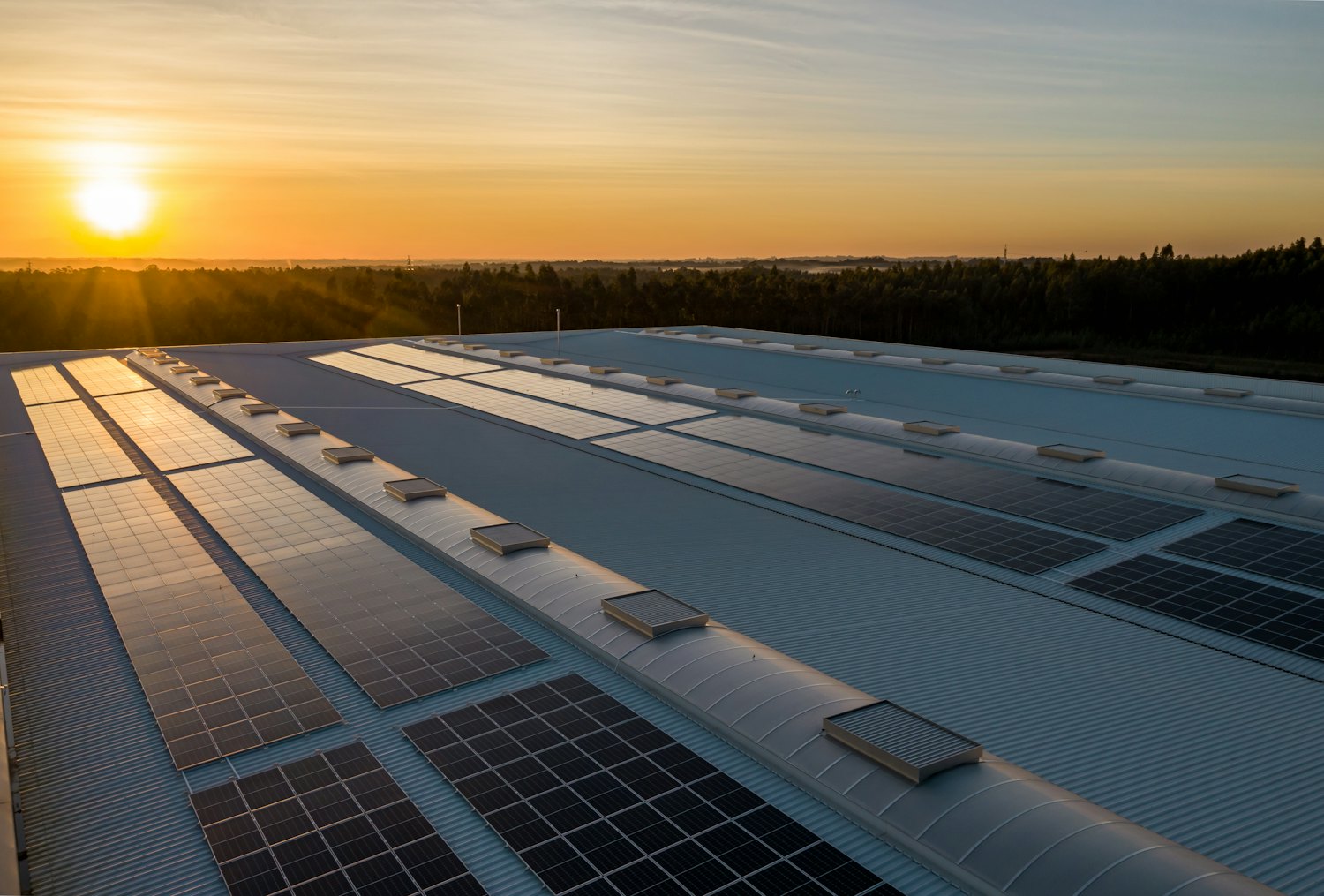
Rooftop solar panels glowing under a golden-hour sunset Photo: Unsplash

05 — But I have solar…

Solar panels are a smart move. Here's what they don't cover yet.

If you've already gone solar, you're ahead of most homeowners — these grid trends hit you less than your neighbors. But most rooftop systems still depend on the same strained grid, and there are a few gaps the brochure usually skips. Here's what they are — and what, if anything, to do about them.

A solar home's typical day ◂ drag to explore ▸

Solar productionPower bought from the grid
12a6a12p6p12a Panels at peak Evening peak = grid

Drag the slider through a day. Illustrative schematic — shape varies by system size, season, and usage, but the pattern is universal: solar peaks midday; demand peaks after sunset.

The sun sets; the meter keeps spinning

Solar produces nothing at night. On summer evenings — exactly when prices and grid stress peak — your home buys from the grid like everyone else.

U.S. EIA / NREL

In a blackout, most panels go dark too

For lineworker safety, grid-tied solar automatically shuts off when the grid goes down (“anti-islanding”). Without a battery, a sunny day during an outage still leaves you powerless.

UL 1741 / IEEE 1547 safety standards; U.S. DOE

South Carolina pays a quarter on the dollar for your extra solar

Under SC's “Solar Choice” tariff, the surplus a new Duke Energy solar customer has left at the end of the month is bought back at roughly 3–4¢ per kWh — about a quarter of the ~14¢ you pay for power. Sell a kilowatt-hour cheap at noon, buy it back at full price at 8pm, and ~75% of its value evaporates. And if you enrolled between 2019 and 2021, your grandfathered full-retail credit expires May 31, 2029. The less your exports earn, the more storing your own power matters.

SC Public Service Commission, Docket 2020-264-E (Duke Solar Choice); DSIRE; SolarReviews, 2025

Same house, same sunshine — flip the battery on ◂ tap to compare ▸

Solar powering your home Battery — storing by day, powering the home after dark Bought from the grid Surplus sold to the grid
Power bought from the grid
Home runs on your own solar
Evenings & overnight run on
~4¢ what Duke pays for your leftover solar (net-excess rate)vs~14¢ what you pay to buy power back after darkEvery purple bar above is power sold low and bought back high — that spread is the battery math in South Carolina.

Hour-by-hour model of one sunny day: ~7.5 kW rooftop solar, 16 kWh home battery (sized to cover this home's nights), typical usage. Illustrative — results vary with season, weather, system size, and habits; long cloudy stretches still lean on the grid. Rates: SC Solar Choice net-excess credit ≈ 3–4¢/kWh (surplus first offsets same-month usage; the leftover gets the low rate); Duke Energy Carolinas SC residential ≈ 14¢/kWh.

A battery is what keeps your solar working after sunset — and through a blackout

A home battery stores the solar you make during the day so you can use it at night, ride through outages, and avoid buying power when grid prices spike. As demand surges and the rules shift, storage is increasingly what turns solar from a “nice hedge” into real resilience — which is exactly why grid strain is pushing more homeowners to pair panels with batteries. It's one option worth understanding: not a silver bullet, and not right for every home.

U.S. DOE / NREL on residential storage & resilience; Electrek, 2026

06 — What you can do

Four moves that protect your bill before the next rate increase

You can't stop the data-center build-out. But you can understand how it reaches your bill — and make informed choices before the next rate increase, not after.

Know your rate plan

Find out if you're on a time-of-use or tiered rate. Peak-hour pricing is where grid strain hits your bill hardest — and where small habit changes save the most.

Track your trend, not just your bill

Pull 12 months of usage from your utility. Knowing your real evening and overnight draw tells you how exposed you are when the sun's down.

Tighten the easy wins first

Efficiency is the cheapest kilowatt-hour. Insulation, smart thermostats, and shifting big loads off-peak blunt rate hikes immediately — solar or not.

Understand storage before you need it

If outages or peak pricing worry you, learn how home batteries work, what incentives exist in your state, and whether the numbers make sense for your home. Learn more about all four below →

Your next step

Want to learn more about home batteries? Start here

Leave your details and we'll text you — plain English, no sales pitch, nothing to buy. You'll learn:

  • How a battery actually works with (and without) solar — and what it can't do
  • The quarter-on-the-dollar math: when storing your power beats selling it in SC
  • What really happens to your solar (and your lights) during an outage
  • The key questions to ask any installer before you spend a dollar — plus how to read your rate plan

Nothing to buy. No obligation.

Built on public data from the U.S. DOE, NERC, the IEA, and PJM — every figure is sourced and dated. See the sources →

P.S. — Duke Energy Carolinas' next scheduled rate increase takes effect August 1, 2026. It's worth understanding your rate plan before then — we'll show you how to read it.

We'll text you shortly. By submitting, you agree Blue Ridge Solar & Storage may contact you by text message (SMS), phone, or email about your home's energy options. Consent isn't a condition of any purchase; message & data rates may apply; reply STOP anytime to opt out. We never sell or share your information. See our privacy notice.


Questions

Straight answers

Are data centers really the reason my bill is going up?
They're not the only reason — fuel prices, inflation, storm recovery, and aging infrastructure all play a part. But across regions like PJM, the grid's own independent market monitor calls data-center load growth the “primary reason” for recent capacity-price spikes, which flow into household bills. It's a significant and growing factor layered on top of the usual ones.
Isn't AI demand being exaggerated?
Projections vary, and we've used ranges from independent institutions (national labs, the IEA, grid operators) rather than vendor hype. Even conservative estimates show data centers roughly doubling their share of U.S. electricity this decade. The uncertainty is about how much, not whether, demand is climbing.
I have solar — am I not already protected?
Partly. Solar lowers your daytime grid purchases, which is real and valuable. But at night, during outages, and as net-metering rules tighten, most grid-tied solar homes are still exposed. Battery storage is the piece that closes that gap — though whether it pays off depends on your rates, usage, and incentives.
Will rolling blackouts actually happen?
NERC, the continent's reliability regulator, has flagged elevated risk of supply shortfalls during extreme weather in much of North America this decade. That doesn't guarantee blackouts — grids are actively adding supply and demand-management — but the margin for error is shrinking as demand grows faster than new power comes online.
Who's behind GridShift?
GridShift is published by Blue Ridge Solar & Storage, a home solar & battery company serving the Upstate of South Carolina. We publish this page free because some readers later ask us about home batteries — and we'd rather you start from the facts than a sales pitch. Reading it puts you under no obligation, and we'll tell you plainly when something isn't right for your home. Questions? hello@blueridgesolarstorage.com · (864) 555-0143.

Transparency

Sources & methodology

We believe an awareness page should show its work. Every figure here traces to a named, public source — verified May 2026. Click to expand the full list.

View all sources
  1. Lawrence Berkeley National Laboratory / U.S. DOE — “2024 United States Data Center Energy Usage Report” (Dec 2024). eta.lbl.gov
  2. U.S. DOE — “DOE Releases New Report Evaluating Increase in Electricity Demand from Data Centers” (2024). energy.gov
  3. International Energy Agency — “Energy and AI” (2025). iea.org/reports/energy-and-ai
  4. Goldman Sachs Research — “AI to drive 160% increase in data center power demand” (2024). goldmansachs.com/insights
  5. PJM Interconnection — capacity (Base Residual) auction results, 2024–2025. pjm.com
  6. Monitoring Analytics (PJM Independent Market Monitor) — RPM Base Residual Auction analysis (2025). monitoringanalytics.com
  7. Utility Dive — “Data centers were 40% of PJM capacity costs in last auction: market monitor.” utilitydive.com
  8. Canary Media — “PJM's capacity costs hit record as grid falls short on supply.” canarymedia.com
  9. North American Electric Reliability Corp. — 2024 Long-Term Reliability Assessment. nerc.com
  10. Utility Dive — “‘Explosive’ demand growth puts more than half of North America at risk of blackouts: NERC.” utilitydive.com
  11. NERC — Incident Review: large load loss (Northern Virginia, July 2024). nerc.com · DCD coverage datacenterdynamics.com
  12. ERCOT — load forecast & large-load reports (2025). ercot.com
  13. Georgia Power — 2025 Integrated Resource Plan; Georgia PSC order (Dec 2025). georgiapower.com
  14. Duke Energy — 2025 Carolinas Resource Plan. duke-energy.com
  15. Fortune — “Nearly 50,000 Lake Tahoe residents face power loss as utility redirects lines to data centers” (May 2026). fortune.com
  16. Electrek — “Data centers are cutting power to homes, driving homeowners to solar and batteries” (May 2026). electrek.co
  17. Public Utilities Commission of Ohio / AEP Ohio — data-center tariff (July 2025). aepohio.com
  18. Loudoun County Economic Development — “Data Centers.” biz.loudoun.gov
  19. Tom's Hardware / Grist — Utah AI data-center campuses & power build-out (2025–2026). tomshardware.com
  20. California Public Utilities Commission — Net Energy Metering (NEM 3.0) decision (2022–2023). cpuc.ca.gov/nem
  21. National Renewable Energy Laboratory (NREL) — rooftop solar & residential storage research. nrel.gov
  22. U.S. DOE — “Homeowner's Guide to Going Solar” (grid-tied behavior in outages). energy.gov
  23. Harvard Electricity Law Initiative — data-center utility deals & cost allocation (2024–2025). eelp.law.harvard.edu
  24. Electric Power Research Institute (EPRI) — “Powering Intelligence” load-growth update (Feb 2026): 9%–17% of U.S. electricity by 2030. powering-intelligence.epri.com
  25. Carnegie Mellon University (Open Energy Outlook, with NC State) — data-center growth & electricity bills (2025). cmu.edu
  26. PowerLines — “Utilities requested record $31 billion in rate increases in 2025” (Jan 2026). powerlines.org
  27. U.S. EIA — residential electricity prices (sales, revenue & price). eia.gov
  28. Utility Dive — “NERC issues rare Level 3 alert over data-center load losses” (May 2026). utilitydive.com
  29. NERC — Incident Review of the large load loss (Northern Virginia, July 2024). nerc.com (PDF)
  30. Goldman Sachs Research — “AI to drive 165% increase in data center power demand by 2030” (2025). goldmansachs.com
EDITOR'S NOTE (remove before publishing): Figures verified 2026-05-31 against the sources above. Re-confirm before each launch — auction results, IRPs, and reliability assessments update at least yearly. For the Greenville/Upstate SC card, add a hyperlocal Duke Energy figure or a named local project when available.